

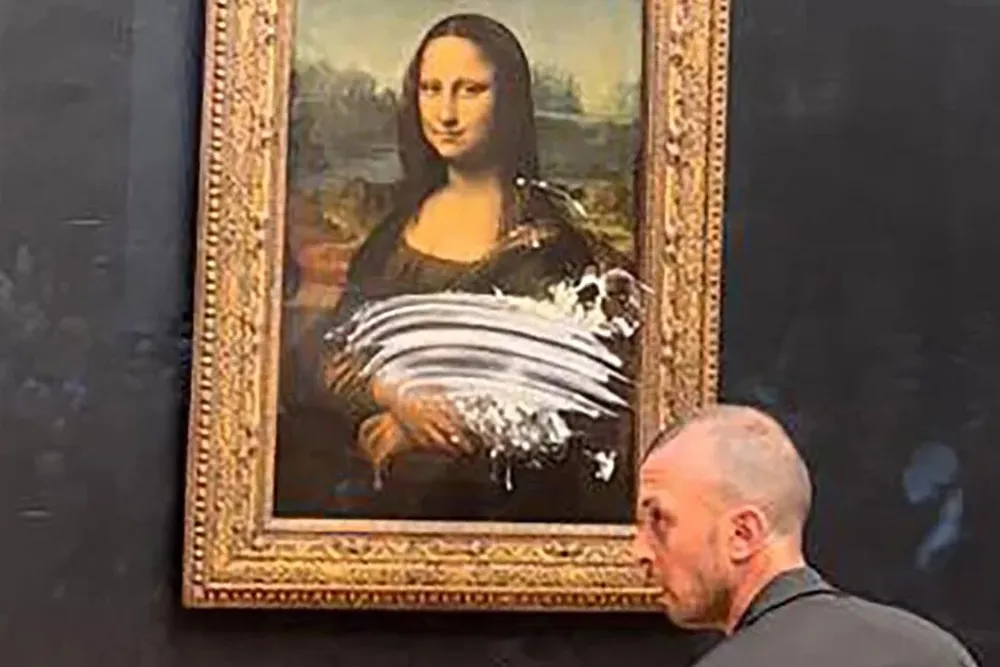
The Mona Lisa is arguably the most famous painting in the world, admired for its enigmatic expression, masterful technique, and enduring mystery. Krakelee Mona Lisa Yet beyond the subject’s subtle smile and the artist’s brilliance lies another intriguing feature that often goes unnoticed at first glance: the delicate web of fine cracks covering the painting’s surface. Known as krakelee (or craquelure in French), this intricate pattern has become an essential part of the artwork’s identity, telling a story of time, preservation, and the physical nature of painting itself.
What Is Krakelee?
Krakelee refers to the network of fine cracks that appear on the surface of paintings as they age. These cracks form naturally over time due to changes in temperature, humidity, and the gradual drying and shrinking of paint layers and varnish. While at first it might seem like damage, krakelee is actually a normal and often unavoidable process in traditional paintings, especially those created with oil paints on wooden panels or canvas.
In the case of the Mona Lisa, the krakelee is particularly delicate and evenly distributed, creating a subtle texture that enhances the painting’s visual depth. Rather than detracting from the artwork, these cracks have become a testament to its authenticity and longevity.
The Origins of the Mona Lisa’s Krakelee
Painted in the early 16th century using oil on a poplar wood panel, the Mona Lisa has endured over five centuries of environmental changes, transportation, and human interaction. The materials used in its creation play a significant role in the formation of krakelee.
Oil paint dries slowly through a process of oxidation, and different layers of paint can dry at different rates. Over time, this uneven drying leads to tension within the layers, resulting in fine cracks. Additionally, the wooden panel beneath the paint expands and contracts with changes in humidity, further contributing to the development of the crack network.
The varnish layers applied to protect the painting also age and become more brittle, adding another dimension to the krakelee pattern. Together, these factors create the unique and recognizable surface texture seen today.
Types of Krakelee in the Mona Lisa
Not all cracks are the same, and experts can learn a great deal about a painting by studying its krakelee. In the Mona Lisa, several types of crack patterns can be observed:
1. Fine, Even Cracks
These are the most common in the painting and form a uniform network across the surface. They indicate a stable aging process and are typical of well-preserved oil paintings.
2. Age-Related Craquelure
These cracks develop naturally over centuries and are considered a sign of authenticity. Their presence helps art historians confirm that the painting is original and not a later copy.
3. Structural Cracks
Although less prominent in the Mona Lisa, structural cracks can occur due to movement in the wooden panel. These are usually more pronounced and can signal areas of stress.
The relatively gentle and consistent krakelee pattern in the Mona Lisa suggests that the painting has been carefully maintained throughout its history.
Why Krakelee Matters
Krakelee is more than just a visual feature—it holds valuable information about a painting’s history and condition. For art historians and conservators, studying the crack patterns can reveal:
- The materials and techniques used by the artist
- The environmental conditions the painting has experienced
- Past restoration efforts
- The authenticity of the artwork
In fact, the specific krakelee pattern of a painting is often as unique as a fingerprint. Experts can use it to distinguish originals from forgeries, as replicating natural aging is extremely difficult.
Conservation and Preservation
Preserving the Mona Lisa and its krakelee is a delicate balancing act. While the cracks themselves are stable, the painting must be protected from further deterioration. Today, it is housed in a climate-controlled glass case that regulates temperature and humidity, minimizing stress on the materials.
Conservators avoid aggressive restoration techniques that could alter or remove the krakelee. Instead, they focus on stabilization—ensuring that the existing cracks do not worsen. Cleaning and varnish removal are carried out with extreme caution to preserve the painting’s original character.
Interestingly, modern conservation philosophy recognizes that krakelee is part of a painting’s history. Rather than trying to “fix” it, experts aim to preserve it as evidence of the artwork’s journey through time.
Krakelee and Visual Perception
The presence of krakelee subtly affects how viewers perceive the Mona Lisa. The fine cracks diffuse light across the surface, contributing to the painting’s soft, almost dreamlike quality. This effect complements the artist’s use of sfumato—a technique that blends colors and tones seamlessly.
Up close, the cracks are clearly visible, reminding viewers of the painting’s age. From a distance, however, they blend into the image, allowing the subject’s expression to take center stage. This duality adds to the painting’s mystique, bridging the gap between material reality and artistic illusion.
The Challenge of Replicating Krakelee
Artists and forgers have long attempted to replicate the krakelee of old masterpieces, but achieving a convincing result is extremely difficult. Krakelee Mona Lisa Artificial cracks often lack the randomness and depth of natural aging, making them detectable under close examination.
Modern technology, including high-resolution imaging and microscopic analysis, allows experts to study krakelee in extraordinary detail. These tools can reveal whether cracks formed naturally over centuries or were artificially induced.
In this way, krakelee serves as a powerful tool in the fight against art forgery, protecting the integrity of priceless works like the Mona Lisa.
Scientific Study of Krakelee
The study of krakelee has evolved into a specialized field combining art history, chemistry, and physics. Researchers analyze crack patterns to understand the mechanical properties of paint layers and the effects of environmental conditions.
Advanced imaging techniques, such as infrared reflectography and X-ray scanning, allow scientists to examine the layers beneath the surface without damaging the painting. These methods provide insights into the artist’s process and the painting’s structural stability.
In the case of the Mona Lisa, such studies have revealed the complexity of the layering technique and the careful craftsmanship that contributes to its enduring beauty.
Cultural and Symbolic Significance
Over time, the krakelee of the Mona Lisa has taken on a symbolic meaning. It represents the passage of time and the resilience of art. The cracks serve as a reminder that even the most celebrated masterpieces are subject to the forces of nature.
Far from diminishing the painting’s value, the krakelee enhances its authenticity and emotional impact. It connects viewers to the past, offering a tangible link to the moment of creation over 500 years ago.
Conclusion
The krakelee of the Mona Lisa is more than a network of cracks—it is a visual record of history, a marker of authenticity, and a testament to the enduring nature of great art. Formed through centuries of natural aging, these delicate lines add depth and character to one of the world’s most iconic paintings.
By studying and preserving this intricate pattern, conservators and researchers continue to uncover new insights into the painting’s past while ensuring its future. For viewers, the krakelee offers a deeper appreciation of the artwork, reminding us that beauty often lies not only in perfection but also in the subtle traces of time
